Which of the Following Is the Strongest Predictor of Family Violence
Introduction
Partner violence is one of the virtually hurtful and traumatic experiences a homo tin can experience as it shatters interpersonal trust and sense of condom (Stacey et al., 1994). Disturbingly, the prevalence of partner violence in the population has proven to be very big. An international population survey of physical abuse including 48 countries plant that equally many every bit 69% of women state that they have been subjected to physical abuse past a partner at some time of their life, just the results varied widely past country (Krug et al., 2002). Although violent episodes are frequently thought of as a clear-cut case with a powerful perpetrator and a powerless victim, nigh violence is to some extent reciprocal (Gausel et al., 2018) and in fact, several studies accept institute that as many males equally females are exposed to partner violence (Haaland et al., 2005; Jose and O'Leary, 2009; Capaldi et al., 2012; Thoresen and Hjemdal, 2014). Indeed, studies from the Usa take found that up to 61% of clients seeking couple and family therapy (CFT) have experienced couple violence (CV) (Jouriles and O'leary, 1985; Cascardi et al., 1992; Vivian and Malone, 1997) and it is reasonable to believe that these numbers are relevant for other comparable countries as well, such as Norway (Ormhaug et al., 2012). However, current studies have solely focused on CV and did not investigate the family unit violence that most frequently co-occurs and includes children. Hence, in the present report, we wanted to investigate both the physical CV and the physical family violence within a CFT sample.
In intimate relationships, such as family relations and couple relationships, in that location are extensive opportunities of experiencing and committing moral failures. Some of them are minor (e.g., forgetting important appointments), but others are more than severe and some even illegal (e.g., abuse and violence). Naturally, committing acts of violence inside families and couple relationships represents a grave moral failure (Gausel et al., 2018) that seriously question your integrity equally a moral person (Gausel and Leach, 2011). Withal, having been violent might atomic number 82 the perpetrator to exist concerned for their social-image every bit a moral person, and thus fear being condemned by others, especially if the use of violence is in take chances being exposed to these others (Gausel and Leach, 2011). According to Gausel and Leach (2011) and Gausel et al. (2018) this should promote fifty-fifty more violence in lodge to hinder the victim from exposing information technology or telling others near it. However, being victim to violence is a traumatic experience as well (Stacey et al., 1994) as it seriously question who you are as a person, especially your worth as a young man human (Loring, 1994). Due to this, information technology is often appraised as a result of deep disrespect and because of this, it often promotes reciprocal violence (Gausel et al., 2018). In support of this, Gausel et al. (2018) conducted a field experiment in Liberia, Africa, with survivors of civil-wars that had been associated with groups that had been both victims and perpetrators of grave violence. In this study they argued for, and found, that when these survivors were encouraged to reflect on their victim-episodes they were significantly more motivated in seeking revenge than if they were encouraged to reverberate on their perpetrator episodes. Hence, we discover this especially useful in our context of couple and family unit violence (i.e., domestic violence) as the involved parties are both perpetrators and victims of violence, a type of violence that is suggested to be the most prevalent type of domestic violence (Fusco and Fantuzzo, 2009; Stith et al., 2011).
Even though CV primarily occurs among adults, information technology affects and includes the children severely. In fact, a Norwegian national survey (Haaland et al., 2005) institute that thirty% of the children witnessed the CV that had occurred, while an American report (Fusco and Fantuzzo, 2009) found that as many equally 95% of the children had been exposed to violence exercised within the family. Of these children, 75% had an agile office in trying to influence the situation by contacting a neighbour, calling the police, or protecting the victims of violence with their own bodies. Being a witness to violence greatly bear on children (Appel and Holden, 1998; Slep and O'leary, 2005; Kimball, 2016; Øverlien and Holt, 2018). In line with this, a meta-analysis by Kitzmann et al. (2003) concludes that 63% of children exposed to violence develop internalizing (east.g., posttraumatic stress disorder) and externalizing (eastward.g., assailment) problems. Hence, this grouping of children could exist expected to become clients in children and boyhood clinics. Furthermore, children who experience violence in their childhood have higher risks of using violence themselves (Raundalen, 2009) and being exposed to violence in their adult lives (Wolf and Foshee, 2003; Renner and Slack, 2006; Øverlien, 2012). Hence, there is a high run a risk that the problem of violence gets passed from one generation to the adjacent.
Plain, therapists cannot offer advisable treatment for CV or family violence if information technology is not detected, and unfortunately research shows that clients oft do not inform their therapist virtually violence when they seek help (Ehrensaft and Vivian, 1996; Middelborg and Samoilow, 2014). Hence, several authors have recommended the use of universal screening for CV. Nevertheless, about therapists do non adhere to these recommendations in their clinical practice (Schacht et al., 2009; Todahl and Walters, 2011). We have non found anyone suggesting universal screening for family violence although it occurs so oft. The lack of such screening implies that violence is often not discovered and thereby not treated (Stith et al., 2011). This seems to exist the case too when a child is the alphabetize patient. Reigstad et al. (2006) institute that 60% of the children in their study had experienced concrete violence in their family unit, but that was reported in the journaling system only in 0.4% of these cases. Thus, it was not discovered or not found to be important for the treatment. The lack of couple and family unit violence disclosure within the CFT field represents a professional person challenge, in particular since CFT treatments are found to exist effective treatments for CV (Stith et al., 2012).
To help clinicians detect cases where violence is part of the problem, even if it is not explicitly mentioned in the referral or by the clients, therapists need knowledge of theory, typical patterns of partner violence (run into e.m., Walker, 1979; Bensimon and Ronel, 2012; Entilli and Cipolletta, 2017), and predictors of couple and family violence. Knowledge of predictors of couple and family violence tin besides help therapists understand the complication of this type of violence and thereby provide more appropriate therapy. Moreover, developers of treatment for couple and family violence tin can utilise the predictors to tailor new and peradventure more efficient treatments.
Even if predictor studies of couple and family violence are rare on a clinical CFT sample, predictor studies of CV have been conducted on other samples [see e.g., O'Leary and Woodin (2009) for a review]. Unlike many other health bug, few social and demographic characteristics define risk groups for intimate partner violence (Jewkes, 2002). However, CV relates to other personal and relational factors. Low income and low level of education accept been constitute to be associated with higher prevalence of CV (encounter e.g., Pan et al., 1994; Stith et al., 2011). Furthermore, it has been adamant that concrete CV is associated with booze and substance abuse, both at nowadays time and in adults' family unit of origin (FOO) (east.yard., Coker et al., 2000; Fals-Stewart, 2003; Fals-Stewart et al., 2005; Stith et al., 2012). In addition, the utilize of violence in close relations is confirmed to be closely related to anger (Simpson et al., 2007).
A close relationship between concrete and sexual abuse has been constitute in several studies (e.thou., Simpson et al., 2007, 2008; Stith et al., 2012). Nonetheless, we could not find whatsoever written report that investigated the human relationship between sexual satisfaction and CV. Issues of sexual satisfaction are common in CFT treatment. Since expert sexual satisfaction is plant to be associated with relationship satisfaction, dearest, delivery, and stability (Young et al., 1998; Sprecher, 2002; Butzer and Campbell, 2008), it is reasonable to believe that at that place is less CV when the sexual satisfaction is loftier. About couples argue and fight over practical issues like household chores, and it is common that some of these bug occur repeatedly (Gottman and Argent, 2015). These authors fence that the underlying bug are often values or expectations: e.g., if the expectation of one partner about the other partner's household chores is higher than what the other expects of herself, there is likelihood of disharmonize. This could lead to tiring arguments with loftier tension or even violent outcomes. However, different people have unlike conflict direction styles that have been assessed in relation to CV (see e.g., Vivian and Malone, 1997; Simpson et al., 2007; Gottman and Silver, 2015), and the findings suggest some styles of disharmonize direction to be far more than associated with violence than others. The authors define these in dissimilar ways, simply there is a consensus that cocky-command is viewed as a positive asset in high conflict.
Every bit mentioned, the knowledge of couple and family violence inside a clinical CFT sample is limited. In that location are even fewer studies of predictors of couple and family violence inside this group of clients, and no studies where family violence has been included. In this report, we investigated some characteristics among CFT clients with defined issues of violence. Furthermore, we investigated a model that may exist helpful in discovering couple and family violence, thus helping therapists to assess what actions to have in therapy to prevent further concrete violence. To our knowledge, this is the first study to investigate CV on a clinical CFT sample outside the The states, and the starting time written report to investigate predictors of both concrete CV and concrete family violence in a CFT sample.
The inquiry questions are:
(1) What is the prevalence of physical couple and family violence in a clinical sample?
(two) What identifies clients who experience physical CV?
(3) What predicts physical couple and family violence?
Materials and Methods
Nosotros have conducted a written report of clients seeking CFT treatment by using quantitative data collected with the Systemic Therapy Inventory of Modify (STIC) (Pinsof et al., 2009) feedback organisation. STIC measures several aspects of clients' lives including physical couple and family violence together with several items that possibly can predict this violence.
Sample
The initial sample for this study consisted of 830 clients above 18 years of age [mean age forty.iii years (SD = viii.v); historic period range 18–72 years; 51.8% were women, mean ii.three children (SD = 1.i), come across the tabular array in the Supplementary Material for more details].i Data collection started in March 2010 and was ended in April 2016 and the sample consists of data from all three levels in the stepped level of care within CFT in Norway. The first and second levels of care were represented by outpatient agencies. At the first level, no referral was needed. The tertiary and concluding level of care was represented with an inpatient CFT agency, where a referral was needed. In all, 56% (462) outpatients and 54% (368) inpatients were included in the study. All participants completed the STIC (Pinsof et al., 2009) initial questionnaire in Norway during a pilot (Tilden et al., 2015) and an RCT study (Tilden et al., 2019).
Ethics
Written informed consent for collecting the project data was obtained from each participant. This study was canonical past the Modum Bad Ombudsman for Data Protection and the Regional Ethics Committee for Medical Research with human subjects (2017/96/REK sør-øst C). The primary study is registered at ClinicalTrials.gov. Since the data originate from regular clinical practice, no inclusion or exclusion criteria take been used except for the ones each site has for accepting clients for treatment.
Measurements
Measures
Systemic Therapy Inventory of Modify (Pinsof et al., 2009) is an cess and feedback arrangement in which clients fill out a questionnaire before each therapy session. Via electronic devices, the clients evaluate their response to treatment, including progression, and alliance to the therapist (Pinsof et al., 2009; Tilden et al., 2010). Customer evaluations are candy into a study that is returned to the therapists who can use this information as the ground for understanding and hypotheses in the clinical assessment of the current customer. The response options in STIC are on a five-level scale from worst to best option. Modules are added depending on the therapy fashion and number of clients in the therapy arrangement. The questions cover six subscales, private problems and strengths (IPS), FOO, relationship with partner, family/household, children's problems, and strength and relationship with child or children. On average, it takes 45 min to complete the STIC questions before the kickoff treatment session. Before every subsequent session, the clients complete a brusk version of STIC that takes 7–8 min to fill out. Because this report is cantankerous-sectional by making use of data before the first session only, the intersession information were not included. STIC has good internal reliability (Pinsof et al., 2009; Zinbarg et al., 2018; Zahl-Olsen et al., in review) with a Cronbach's alpha as high equally 0.94 for the unlike subscales.
The STIC consists of several subscales that further incorporate factors and items, and some of these address the topic for this study. The response options to those questions were, not at all/never, rarely, sometimes, often, and all of the time. The human relationship with partner (RWP) calibration has one item addressing physical violence betwixt the members of the couple: "We become into shoving or striking each other when we fight." The family unit household (FH) scale has two items addressing physical violence exerted within the family: "Someone in my family is physically abusive to other family members" (item 1) and "There is someone in my family unit who pushes other family unit members around physically to go his or her mode" (particular 2). Nosotros combined these ii items to one family violence particular in our analysis. We hypothesized that both the CV item and the family violence particular would load from the aforementioned latent variable Physical Violence. Further, the IPS scale, the RWP scale, and the FOO scale all have variables we, based on the presented theory and the literature review above, hypothesize are predictors for the underlying latent variable – Physical Violence. Nosotros also modeled that perceived anger toward the partner and level of expectation of household chores were predictors of Physical Violence. Nosotros hypothesized two negative predictors of Concrete Violence: Self-control of thoughts, impulses, and rage equally the first one, and sexual satisfaction inside the relationship every bit the 2d. See Tabular array 1 for a full list of items included in the variables.ii

Table i. List of items used to model physical violence.
Statistical Analysis
We used IBM SPSS Statistics 25 for descriptive, bivariate, and multivariate assay, and Amos 25 for structural equation modeling (SEM) analysis. Descriptive, correlation, t-tests, and crosstab analysis were performed as instructed past Field (2018) to describe the sample, calculate the statistics, and to compare the grouping of clients who indicated CV with the clients who did non. Farther, the statistical analyses included two multivariate general linear models, which were performed as described by Field (2018), where existence of CV was gear up every bit the fixed factor.
In this study, we used SEM to predict Concrete Violence. This method has several advantages compared to more conventional statistical techniques (Kline, 2016). For example, in multiple regression, it is an supposition that all predictors are measured without errors. This is routinely violated in practice, just when using SEM, nosotros tin brand explicit representations of measurement errors. SEM too makes information technology possible to model the correlations between the variables and include that as part of the analysis. Finally, SEM involves significance testing of whole statistical models and non only individual effects (Kline, 2016). Based on our expectations, nosotros modeled the latent variable Physical Violence, which is expressed equally physical violence between the couple and physical violence betwixt others in the family unit. Further, we hypothesized that predictors in the model were the partner's expectations toward each other, levels of anger, sexual satisfaction, and self-control, as described below.
Results
Descriptive Analyses
Our first approach to the research question addressing the prevalence of couple and family violence was to analyze the clients' responses to the item "Nosotros become into shoving or hitting each other when nosotros fight." As many equally 20.4% (n = 169) confirmed that this described their relationship from "rarely to all of the time." This grouping is from now on called the CV grouping equally discriminant from the rest of the group labeled no couple violence (NCV) group. Inside the CV group 84% (142) reported rarely, thirteen% (22) sometimes, 3% (5) oftentimes, and 0% (0) all the time. Our next approach to the first research question was to analyze the clients' responses to family violence. As many as 24.9% (207) responded from "rarely to all of the fourth dimension."
Our second inquiry question addressing the identification of clients who experience physical CV was assessed by comparing the CV and the NCV groups. We found that the CV grouping had significantly more than prior experience with therapy [χ2(iii) = 8.165, p = 0.043] and had lower income [χ2(2) = 13.612, p = 0.001] compared to the NCV group. Yet, the two groups did non differ on measures of age and education. An of import divergence betwixt the two groups was the presence of family violence. In the CV grouping, as many every bit 49.7% reported that family violence was present. This was significantly college [χ2(1) = 84,324, p < 0.001] than in the NCV group reporting 18.0%. The CV grouping was significantly more distressed than the NCV grouping, on all the measures included in the model. Using Roy'south Largest Root, in that location was a significant effect of experiencing CV on couple and family violence, Θ = 6.34, F(ii,691) = 2191.twoscore, p < 0.001. For the violence items college values are better and for family violence the sample of clients in the CV sample had a mean of 4.46 (SD = 0.61) and the NCV group 4.77 (SD = 0.55). For CV the sample of clients in the CV sample had a mean of 3.81 (SD = 0.46) and the NCV group 5.00 (SD = 0.00). Further, using Roy's Largest Root, in that location was a meaning effect of experiencing CV on the predictors in the model, Θ = 0.19, F(4,762) = 35.33, p < 0.001. For Anger and Expectation higher values are improve and the mean values on Anger were 3.20 (SD = 0.89) for the CV sample and 3.82 (SD = 0.97) for the NCV sample. The hateful values on Expectation were 2.89 (SD = 0.81) for the CV sample and 3.56 (SD = 0.77) for the NCV sample. For Sexual satisfaction and Cocky-control lower values are better and the mean values for Sexual satisfaction were 2.87 (SD = 0.99) for the CV sample and 2.66 (SD = one.08) for the NCV sample on. The hateful values for the CV sample were one.96 (SD = 0.83) and i.63 (SD = 0.71) for the NCV sample on Cocky-control. Come across the tabular array in the Supplementary Textile for farther information.
Model Analysis: Structural Equation Modeling
Our third research question addressed possible predictors of couple and family unit violence in the total sample. The model was constructed with the variables as previously described3, with four predictors and one latent variable, Physical Violence, equally the outcome variable. The model equally displayed in Effigy 1 explained 53% of the change in Concrete Violence and demonstrated very good fit for this sample. The chi-square was: χtwo(27) = 78.672, p = 0.000, which indicates that the model fits the information well. However, given the complication of the model, chi-square is an inadequate test of model fit (Kline, 2016). A ameliorate way to examination how well our hypothesized model fit the information is provided by a χtwo/df ratio below 3 (2.914) and several chi-square-based fit indices higher up 0.900 [incremental fit alphabetize (IFI) = 0.967, comparative fit alphabetize (CFI) = 0.967]. In addition, good model fit was shown past our observation of a residuum index, where lower is meliorate [root-mean-foursquare error of approximation (RMSEA) = 0.048 with the conviction intervals, 0.036–0.061; see Kline, 2016]. The model was stable also when controlling for demographics.4 The standardized solution is shown in Figure 15, and the calibration inter-correlations and descriptive statistics are presented in Table 2.
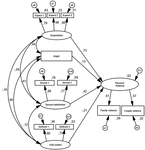
Figure 1. Predictive model of Physical Violence. All covariances and gene loadings were statistically meaning (p < 0.05).

Table two. Scale inter-correlations and descriptive statistics.
The 2 strongest predictors of Physical Violence were Expectation (β = 0.73, p < 0.001) and contrary to our expectation, Sexual satisfaction (β = 0.42, p < 0.001). Anger was also a positive predictor (β = 0.thirteen, p < 0.001). Self-command was a statistically significant negative predictor of Physical Violence (β = −0.21, p = 0.004). The correlation analysis showed that all the predictors were statistically significant related to each other (all ps < 0.05). The medium levels of correlation and the variation of the correlation coefficients indicate that the included variables mensurate different aspects of the client's life.
Discussion
We plant that 20.4% of the clients reported that concrete violence occurs in their human relationship. Furthermore, as many as 49.7% of the clients reporting physical CV also reported physical family violence. The clients with physical CV had lower income and more prior experience with therapy. The strongest predictor of Physical Violence were Expectation, while Self-control was a negative predictor.
Prevalence of Physical Couple Violence in a Clinical Sample
The prevalence of CV in the clinical CFT sample in the current study is twenty.4% which is more than four times as high as the prevalence of CV in the full general population in Norway (Haaland et al., 2005). More precisely, this written report identifies physical violence and not a more generally defined violence. Furthermore, in this study, we have specified the questions with regard to the current human relationship. This is contrary to most population studies, which ask if people have experienced CV in whatever intimate relationship until now. U.s.a. studies of couples seeking therapy have plant frequencies of CV upwardly to 61% (Jouriles and O'leary, 1985; Cascardi et al., 1992; O'Leary et al., 1992; Vivian and Malone, 1997; Simpson et al., 2007; Stith et al., 2011). However, in these studies, they have used a more general definition of CV that includes psychological, physical, and sexual violence without differentiating between these. Hence, more research is needed where the types of violence are accounted for.
Couple Violence and Family Violence Occurs Simultaneously
Our descriptive analyses found that there is a significantly higher distribution of family violence in the CV group than in the NCV group. This co-occurrence of violence in the couple and violence in the family is in line with the findings of Slep and O'leary (2005) and Appel and Holden (1998). However, the loftier prevalence of both couple and family unit violence amidst clients seeking CFT identified in our report indicates that every therapist meets clients with these issues oft, fifty-fifty if it is not addressed. Further efforts should therefore be made in CFT to find and end couple and family unit violence than is the instance currently. Since some research indicates that clients are more likely to reveal family unit violence when responding to a questionnaire compared to when questioned face up to face past a therapist, e.g. (Ehrensaft and Vivian, 1996; Andersen and Svensson, 2013; Zahl-Olsen and Oanes, 2017), we suggest implementing systematic screening for both couple and family violence, for instance as function of a feedback arrangement.
Family unit violence co-occurs with CV for several reasons. Edleson (1999) found that children were involved in the violence amid the adults, while Raundalen (2004) found that children tried to intervene to cease the violence. Further, parents who conduct physical violence against their partner likewise do so toward the children in the family unit (Appel and Holden, 1998; Slep and O'leary, 2005). It is found that children exposed to severe anger and aggression in their domestic surroundings increment their risk of becoming more aggressive (Raundalen, 2009). In addition, children exposed to violence in their dwelling house have college risks of experiencing violence with others later in life compared to those who did not encounter such violence in their babyhood home (see, eastward.k., Wolf and Foshee, 2003; Øverlien, 2012). Indeed, children exposed to violence in their childhood also have a greater adventure of being exposed to developed violence (Renner and Slack, 2006) after in life. Thus, there is a loftier take chances that violence is transferred from one generation to the side by side. Finally, these findings back up the theoretical argumentation of Gausel and Leach (2011). In their theoretical framework, children who are exposed to violence in their home might appraise this violation as a sign of threat to their worth, and by such, a sign of disrespect. However, it can also be appraised every bit a global defect in their family, i.e., we are vehement people, which again might provoke anger. Combined, these two ways to assess violence might encourage further violence to end the ongoing disrespect, a concluding endeavor to protect their social image as someone who is worthy of respect (Gausel, 2013; Gausel et al., 2018).
Differences Between the Samples With and Without Couple Violence
In our study, the prevalence of couple and family violence is higher among those with low income. This is a finding similar to other studies, run across due east.m., Weede (1981), Gelles (1997), and Rennison and Planty (2003). Further, information technology is an interesting finding that the CV group has received more than prior treatment than the NCV group. Still, this might bespeak that the CV group consists of families with more severe issues than the NCV group and therefore needs more treatment. If so, it is an empirical question whether the handling they received was helpful if the violence was addressed every bit a topic in therapy, or whether – equally previously mentioned – the therapeutic interventions so far did not reveal the ongoing violence. There were significant differences between the CV sample and the NCV sample on the levels of distress on the predictor variables. However, the differences were small and both groups indicated distress at all four predictors. Therefore, we connected to investigate the individual differences on the total sample.
Expectation and Acrimony
Our model demonstrated that the experiences of unreasonable expectation from one partner toward the other in relation to household chores were the strongest predictor of Physical Violence. In other words, the more experiences of unreasonable expectation from the partner, the more physical violence in the relationship. This is in understanding with research finding that marital discord serves as a strong predictor of both mild and severe married man-to-wife concrete aggression (Pan et al., 1994; Stith et al., 2008; Capaldi et al., 2012). However, since males and females are constitute to be equally exposed to CV (Haaland et al., 2005; Jose and O'Leary, 2009; Stith et al., 2011; Thoresen and Hjemdal, 2014) our written report did not differentiate betwixt married man-to-married woman and wife-to-husband aggression.
When viewing this strong prediction from Expectation to Concrete Violence from the theoretical perspective of Gausel and Leach (2011) nosotros sympathise why this link is then strong. When someone feel that the other person in their relationship is viewing them as someone who does not manage to live up to what is expected, they might feel inferior, and thus wanting to human action, either to withdraw, which is hard in a close relationship, or by using verbal or physical strength.
We establish that expectation and anger were significantly correlated. It makes sense that when a partner experiences herself or himself to exist criticized and treated unfairly, he or she experiences acrimony (Isdal, 2000). The other way around too makes sense. Gottman and Silver (2015) draw how a person with acrimony and arousal interprets even neutral words every bit negative. This is also in line with the conceptual theory of Gausel and Leach (2011) that being criticized tin can lead to a feeling of inferiority and rejection which again is associated to anger. Nevertheless, anger in our model is the third strongest predictor of Physical Violence. Autonomously from cases where dominating the other partner is the issue it is hard to retrieve of CV occurring without anger, but it is of import to point out that experiencing the feeling of acrimony does not say it has to lead to concrete CV (Leone et al., 2007). Leone et al. (2007) argue that violence is usually about lack of affective regulation, communication difficulties, and the lack of skills for problem-solving. Thus, if a person has not learned to be conscious of and learned how to handle basic feelings such equally anger, this tin, in plow, lead to unwanted behavior like concrete violence.
Sexual Satisfaction
Among our two expected negative predictors for Physical Violence, amend Self-control, and college Sexual satisfaction, only the get-go was confirmed. Moreover, our SEM analyses indicated that Sexual satisfaction in the relationship predicted Physical Violence. This is contrary to our expectations and contrary to studies of sexual satisfaction elsewhere in the field of CFT where sexual satisfaction is establish to be associated with good and healthy relationships (see e.g., Sprecher, 2002; Litzinger and Gordon, 2005; Yeh et al., 2006; Butzer and Campbell, 2008). Likewise, Litzinger and Gordon (2005) found that sexual satisfaction partially compensates for the negative effects of poor communication. Still, one possible way to sympathise our finding that higher sexual satisfaction predicts CV is that couples who emotionally live afar from each other have very little contact and practice not debate and fight. In consequence, they practise not have much sexual intimacy either. This group might level out those who occasionally fight and have a satisfactory sexual life. This inference is supported by the fact that 84% (142) of those indicating concrete CV answered that the physical violence occurred seldom. Furthermore, nosotros found a normal distribution of sexual satisfaction inside the grouping who indicated that they seldom experienced CV. Walker'due south (1979) wheel of violence identifies a honeymoon phase that follows a phase of acute battering. In this honeymoon phase, identified as calm and loving, satisfying sex can be present. This could explain why sexual satisfaction came out as a predictor of concrete violence in this written report. Even so, we have not been able to find research on the direct connection between sexual satisfaction and violence in relationships. Hence, we suggest further research on the human relationship between sexual satisfaction and CV. Finally, the conceptual model of shame (Gausel and Leach, 2011; Gausel, 2013; Gausel et al., 2018) explains that if the moral failure is appraised equally a self-defect that is mendable the person will try to repair what is broken. Sex could exist a way to strengthen and restore 1's cocky-image as someone to love and respect, and fifty-fifty more to build stronger social bonds to the partner and thus prevent condemnation.
Cocky-Control
As mentioned, self-command was institute to exist a negative predictor of Physical Violence. Thus, the more self-command the clients has the lesser concrete violence they experience. Furthermore, this seems to be a variable that is not closely related to the other variables in our model. In other words, this may be a variable that is stable even when the others vary. This seems particularly true in relation to sexual satisfaction and expectation. Thus, from a clinical signal of view, strengthening the clients' self-control could contribute to bringing stability into the relationship and decreasing physical violence.
Strengths and Limitations
Information technology is a strength of our study that we accept data from all three dissimilar levels of CFT handling in Norway, including samples from depression threshold outpatient clinics without the demand of a referral, an outpatient clinic where referral is needed, to an inpatient clinic where referral is needed. However, that the sample, thereby, is heterogeneous could too exist considered a limitation because nosotros accept not analyzed the differences between the clinics. A second forcefulness is the size of the data set and furthermore that approximately one-half of the data stems from an RCT with strict control of data drove. A tertiary strength is that the blazon of violence is specified as physical violence in the current relationship. Even so, it is a limitation that the clients did not study who exercised the CV: whether information technology is themselves as perpetrators, whether they are exposed to information technology by their partner, or whether information technology is both. A 2nd limitation is that we could non differentiate between severe physical violence and minor physical violence. However, one could argue that by dividing the sample into 3 groups rather than 2 we could gain more information: ane = no violence, 2 = seldom violence, 3 = oftentimes or more. However, we had two reasons for not doing so. First, even if violence seldom occurs, nosotros do not know how astringent information technology is, and a few very severe incidents might exist as powerful as many less severe. Second, if violence only rarely occurs it can still be an important part of their family unit life. A tertiary limitation is the narrow focus on acrimony as the only emotion identified as predictor of family unit violence in our model. Undoubtedly, there are other emotions, such as a feeling of rejection (Leary et al., 2006; Gausel, 2013) or of hate (Staub, 2005), that predict violence and anti-social behavior. We admit that we are not able to identify whether 1 or both parties are conducting violence. However, recent research on violent conflicts advise that in most violent conflicts both parties exercise violence but prefer to construe themselves equally victims instead of perpetrators (east.thousand., Mazziotta et al., 2014; Gausel et al., 2018). Past such, it is not unthinkable that if we had been able to explore who exercised violence in our study parties would tend to see themselves as victims and the other as the perpetrator – therefore skewing the reports of violence toward the other instead of reporting their own perpetration (for a discussion, run into Gausel et al., 2018). Some might question if the sample of clients who experienced concrete violence is representative for this group, since 84% of them betoken that the physical violence is experienced rarely and 13% sometimes. We share this concern and want to brand clear that this is how the clients accept reported physical violence in their current relationship, and that under-reporting is possible. However, this sample might not be representative for clients, east.k., seeking therapy specialized at domestic violence or coming to women'south shelters.
Conclusion and Clinical Implications
This study has found that the prevalence of couple and family violence in a clinical sample is high, indicating that many CFT therapists run into this topic in therapy. Because this topic may remain undisclosed during treatment, we assume that a college portion of CFT therapists may relate to this topic indirectly because when this remains a undercover, it may impact a peachy deal on the presented topics in therapy. The notion that men cannot be victims of concrete and psychological violence by their partners (see due east.chiliad., Entilli and Cipolletta, 2017) may impose a considerable barrier for therapists to translate such signs. Since the immediate and consequential damages of couple and family unit violence are grave for the adult, their children, and their future generations, therapists demand tools to discover these issues. Cognition of the predictors in this written report tin can perchance help to uncover physical abuse in couple relationships and families. Therapists who have petty noesis of physical violence and predictors of such violence chance to miss the opportunity to assess signs of an abusive relationship, or to seek farther assist from child protection services and law. Noesis of predictors of physical violence can also bring the confidence in the CFT therapists to dare to ask more than specific and handle the instance in a proper mode. CFT therapists are in contact with more couples and families where violence occur, than the police force (run across e.1000., Reigstad et al., 2006; SSB, 2016) and are enforced to notify when this is uncovered (Barnevernloven, 1993). In Norway, this constabulary too enforce teachers, social workers, and therapists to be aware of circumstances that are harmful (Driscoll, 2018). This challenges CFT therapists, particularly those inspired by social constructionist theories which not want to enter areas in people's lives that the clients exercise not straight address (Anderson, 2001). When information technology comes to violence nosotros cannot allow therapists to be more influenced by their ain perspectives than the data about the situation (Jensen, 2008). Information technology is pivotal to heighten the noesis of predictors of physical violence that could be noticed by CFT therapists and allow a more effective screening.
In addition, as shown in our model, we have addressed certain predictors who tin can help to discover physical violence in ordinary CFT exercise. Furthermore, our findings could help therapists in assessing what actions to take in therapy to prevent farther concrete violence. For example, by focusing the therapy on expectations toward each other's participation in household duties and what lays backside those expectations. It is possible that, through therapy, focusing on attaining common understanding of the expectation toward each other this tension will go downwardly and thus prevent physical violence. Further, equally the conceptual theory of Gausel and Leach (2011) and Gausel et al. (2018) explains, the feeling of rejection, through the experiences of loss of social prototype (others' view of self), and the feeling of inferiority tin can lead to violent acts. Hence, if the focus in therapy is on understanding and acceptation of the partners' view of self, this will probably impact on reduced doubtfulness about the partner's view of self. Since virtually partners want to stay in the relationship even if violence is exerted (Stith et al., 2011) it is reasonable to think that their view of their partners is mostly positive. Reduced uncertainty implies fewer chances of viewing cocky-defects as global, instead increasing the chance that failures are specific and thus can be more hands dealt with. In return, as Gausel and Leach (2011) argue, this should pb to acts of reconciliation and amendments.
These findings address clinical implications on how to treat couples and families where abuse is a topic. Still, it is outside the scope of this paper to give a thorough clinical guide on how to do and so. In that location is a rich literature that the reader is encouraged to search for on this topic.
Suggestions for Further Research
We advise further research on the prevalence and predictors of different types of couple and family unit violence (verbally, sexually, and physically) in clinical samples. Based on our unexpected finding of the relationship between sexual satisfaction and concrete violence nosotros suggest investigating this relationship in further research. Our study has also found that alcohol abuse was a less important predictor of physical violence than the literature suggests. Thus, we encourage further inquiry on aspects of expectation, anger, and self-command as predictors for physical couple and family violence.
Information Availability Statement
The raw data supporting the conclusions of this article volition be made bachelor by the authors, without undue reservation, to whatsoever qualified researcher.
Ideals Statement
Written informed consent for collecting the project information was obtained from each participant. This report was approved by the Modum Bad Ombudsman for Data Protection and the Regional Ethics Committee for Medical Research with homo subjects (2017/96/REK sør-øst C). The principal written report is registered at ClinicalTrials.gov. Since the data originate from regular clinical practice, no inclusion or exclusion criteria have been used except for the ones each site has for accepting clients for treatment.
Author Contributions
RZ-O has been responsible for the design, analysis, drafting, and revising of the text. TT, AH, and RZ-O have been responsible for acquiring the data. NG and TB accept been responsible for the analysis together with the main author. AZ-O has been responsible for preliminary analysis, searching for manuscripts and drafting the manuscript. TT, AH, and NG have been responsible for supervising the results and intellectual content.
Funding
This work was financially supported by the Sørlandet Kompetansefond, grant number 2017/28.
Conflict of Involvement
The authors declare that the research was conducted in the absence of any commercial or fiscal relationships that could be construed every bit a potential conflict of interest.
Supplementary Material
The Supplementary Fabric for this article can be institute online at: https://www.frontiersin.org/articles/ten.3389/fpsyg.2019.02847/full#supplementary-material
Footnotes
- ^ 813 defined themselves as heterosexual, 8 equally bisexual, and 2 equally homosexual/Lesbian.
- ^ Since prior studies (encounter e.g., Coker et al., 2000; Fals-Stewart, 2003; Stith et al., 2012) indicated that booze corruption might be of importance and STIC provided measures of alcohol abuse at three different levels: for themselves, for their partner, and in their FOO, we wanted to assess if these were meaning contributors to the model likewise in our clinical sample.
- ^ Results from the CFA on the model was χ2(15) = 64.211, p < 0.001. χ2/df ratio = four.281, IFI = 0.964, CFI = 0.964, RMSEA = 0.063. The correlations were: 0.44 between Expectation and Anger, −0.55 betwixt Expectation and Sexual satisfaction, −0.15 between Expectation and Self-control, −0.41 betwixt Acrimony and Sexual satisfaction, −0.39 between Anger and Cocky-control, and 0.12 between Sexual satisfaction and Self-control. The gene loadings from Expectation was 0.80 to Look 1, 0.47 to Expect 2, and 0.56 to Expect 3. The factor loadings from Sexual satisfaction was 0.88 to Sexsat 1 and 0.77 to Sexsat 2. The factor loadings from Self-control was 0.58 to Selfcont i and 0.75 to Selfcont 2.
- ^ None of the three alcohol abuse items improved the model.
- ^ Results from the analyses of the same model using the CV sample (N = 165) were R 2 = 0.12, χtwo(27) = 37.476, p = 0.087. χii/df ratio = ane.388, IFI = 0.969, CFI = 0.966, RMSEA = 0.048. Analyzing the model on the NCV sample (Northward = 604) requires removal of the latent variable Physical Violence since CV is nothing for all participants in this sample. Thus, the result variable is the manifest variable Family Violence. The results of this model were R 2 = 0.04, χ2(xix) = 63.127, p < 0.001. χ2/df ratio = 3.322, IFI = 0.956, CFI = 0.955, RMSEA = 0.062.
References
Anderson, H. (2001). Postmodern collaborative and person-centered therapies: what would Carl Rogers say? J. Fam. Ther. 23, 339–360. doi: 10.1111/1467-6427.00189
CrossRef Full Text | Google Scholar
Andersen, A., and Svensson, T. (2013). Internet-based mental wellness services in norway and sweden: characteristics and consequences. Adm. Policy Ment. Health Ment. Health Serv. Res. 40, 145–153. doi: 10.1007/s10488-011-0388-2
PubMed Abstract | CrossRef Full Text | Google Scholar
Appel, A. Eastward., and Holden, M. Westward. (1998). The co-occurrence of spouse and physical kid corruption: a review and appraisement. J. Fam. Psychol. 12, 578–599. doi: 10.1037//0893-3200.12.4.578
CrossRef Total Text | Google Scholar
Bensimon, Thou., and Ronel, North. (2012). The flywheel result of intimate partner violence: a victim–perpetrator interactive spin. Aggress. Tearing Behav. 17, 423–429. doi: 10.1016/j.avb.2012.05.004
CrossRef Full Text | Google Scholar
Butzer, B., and Campbell, L. (2008). Adult attachment, sexual satisfaction, and relationship satisfaction: a study of married couples. Pers. Relationsh. 15, 141–154. doi: 10.1111/j.1475-6811.2007.00189.x
CrossRef Full Text | Google Scholar
Capaldi, D. M., Knoble, North. B., Shortt, J. Westward., and Kim, H. K. (2012). A systematic review of run a risk factors for intimate partner violence. Partner Abuse 3, 231–280. doi: 10.1891/1946-6560.3.2.231
PubMed Abstract | CrossRef Full Text | Google Scholar
Cascardi, M., Langhinrichsen, J., and Vivian, D. (1992). Marital assailment: impact, injury, and health correlates for husbands and wives. Arch. Int. Med. 152, 1178–1184. doi: 10.1001/archinte.152.vi.1178
PubMed Abstract | CrossRef Full Text | Google Scholar
Coker, A. L., Smith, P. H., McKeown, R. E., and King, 1000. J. (2000). Frequency and correlates of intimate partner violence past type: physical, sexual, and psychological battering. Am. J. Public Health 90, 553. doi: 10.2105/ajph.90.4.553
PubMed Abstract | CrossRef Full Text | Google Scholar
Driscoll, H. (2018). "Taushetsplikten i arbeid med barn og unge," in Barn og Unge i Midten. Tverrfaglig og Tverretatlig Arbeid i Barn og Unges Oppvekst, eds B. Johannessen, and T. Skotheim, (Oslo: Gyldendal akademisk), 148–172.
Google Scholar
Edleson, J. Fifty. (1999). Children witnessing developed domestic violence. J. Int. Violence xiv, 839–870. doi: x.1177/088626099014008004
CrossRef Full Text | Google Scholar
Ehrensaft, 1000. K., and Vivian, D. (1996). Spouses' reasons for not reporting existing marital aggression as a marital trouble. J. Fam. Psychol. 10, 443–453. doi: 10.1037/0893-3200.10.4.443
CrossRef Full Text | Google Scholar
Entilli, L., and Cipolletta, S. (2017). When the adult female gets violent: the structure of domestic corruption experience from heterosexual men's perspective. J. Clin. Nurs. 26, 2328–2341. doi: 10.1111/jocn.13500
PubMed Abstract | CrossRef Total Text | Google Scholar
Fals-Stewart, W. (2003). The occurrence of partner physical assailment on days of alcohol consumption: a longitudinal diary written report. J. Consult. Clin. Psychol. 71, 41–52. doi: ten.1037/0022-006x.71.1.41
PubMed Abstract | CrossRef Full Text | Google Scholar
Fals-Stewart, W., O'Farrell, T. J., Birchler, One thousand. R., Córdova, J., and Kelley, M. 50. (2005). Behavioral couples therapy for alcoholism and drug abuse: where nosotros've been, where we are, and where nosotros're going. J. Cogn. Psychother. nineteen, 229–246.
Google Scholar
Field, A. (2018). Discovering Statistics Using IBM SPSS Statistics. London: Sage Publishing.
Google Scholar
Fusco, R. A., and Fantuzzo, J. W. (2009). Domestic violence crimes and children: a population-based investigation of direct sensory exposure and the nature of involvement. Child. Youth Ser. Rev. 31, 249–256. doi: 10.1016/j.childyouth.2008.07.017
CrossRef Full Text | Google Scholar
Gausel, N. (2013). "Self-reform or self-defence? Understanding how people cope with their moral failures by understanding how they appraise and feel about their moral failures," in Walk of shame, eds One thousand. Moshe, and N. Corbu, (Hauppauge, NY: Hauppauge), 191–208.
Google Scholar
Gausel, N., and Leach, C. W. (2011). Concern for cocky-image and social image in the direction of moral failure: rethinking shame. Eur. J. Soc Psychol. 41, 468–478. doi: 10.1002/ejsp.803
CrossRef Full Text | Google Scholar
Gausel, Due north., Leach, C. Due west., Mazziotta, A., and Feuchte, F. (2018). Seeking revenge or seeking reconciliation? How concern for social-paradigm and felt shame helps explain responses in reciprocal intergroup conflict. Eur. J. Soc. Psychol. 48, 62–72. doi: x.1002/ejsp.2295
CrossRef Total Text | Google Scholar
Gelles, R. J. (1997). Intimate Violence in Families. Newcastle upon Tyne: Sage.
Google Scholar
Gottman, J. Chiliad., and Silver, N. (2015). The Seven Principles for Making Union Work: a Practical Guide From the Land's Foremost Human relationship Skillful. New York, NY: Harmony.
Google Scholar
Haaland, T., Clausen, South.-E., and Schei, B. (2005). Vold i Parforhold - ulike Perspektiver : Resultater fra den Første Landsdekkende Undersøkelsen i Norge,. Oslo: Norsk institutt for past- og regionforskning, Vol. 2005, 3.
Google Scholar
Isdal, P. (2000). Meningen Med Volden. Oslo: Kommuneforlaget.
Google Scholar
Jensen, P. (2008). The Narratives which Connect.: a Qualitative Inquiry Arroyo to the Narratives Which Connect Terapists' Personal and Individual Lives to Their Family Theraphy Practices. London: Academy of East London.
Google Scholar
Jewkes, R. (2002). Intimate partner violence: causes and prevention. Lancet 359, 1423–1429. doi: ten.1016/s0140-6736(02)08357-5
CrossRef Full Text | Google Scholar
Jose, A., and O'Leary, K. D. (2009). "Prevalence of partner aggression in representative and clinic samples," in Understanding Psychological and Physical Aggression in Couples: Existing Bear witness and Clinical Implications, eds One thousand. D. O'Leary, and Due east. M. Woodin, (Washington, DC: American Psychological Association), fifteen–35. doi: 10.1037/11880-001
CrossRef Full Text | Google Scholar
Jouriles, E. N., and O'leary, K. D. (1985). Interspousal reliability of reports of marital violence. J. Consult. Clin. Psychol. 53, 419–421. doi: 10.1037/0022-006x.53.3.419
CrossRef Full Text | Google Scholar
Kimball, E. (2016). Edleson revisited: reviewing children's witnessing of domestic violence 15 years later on. J. Fam. Violence 31, 625–637. doi: x.1007/s10896-015-9786-seven
CrossRef Full Text | Google Scholar
Kitzmann, Grand. M., Gaylord, N. K., Holt, A. R., and Kenny, E. D. (2003). Kid witnesses to domestic violence. A meta-analytic review. J. Consult. Clin. Psychol. 71, 339–352. doi: 10.1037/0022-006x.71.2.339
PubMed Abstract | CrossRef Total Text | Google Scholar
Kline, R. B. (2016). Principles and Exercise of Structural Equation ModelingFourth Edition, 4th edn. New York, NY: The Guilford Press.
Google Scholar
Krug, Due east. 1000., Dahlberg, 50. L., Mercy, J. A., Zwi, A. B., and Lozano, R. (2002). World report on violence and wellness. Geneva: Globe Health Organization.
Google Scholar
Leary, M. R., Twenge, J. M., and Quinlivan, E. (2006). Interpersonal rejection as a determinant of anger and aggression. Personal. Soc. Psychol. Rev. 10, 111–132. doi: 10.1207/s15327957pspr1002_2
PubMed Abstract | CrossRef Full Text | Google Scholar
Leone, J. M., Johnson, M. P., and Cohan, C. 50. (2007). Victim help seeking: differences between intimate terrorism and situational couple violence. Fam. Relat. 56, 427–439. doi: 10.1111/j.1741-3729.2007.00471.ten
CrossRef Total Text | Google Scholar
Litzinger, S., and Gordon, K. C. (2005). Exploring relationships amongst communication, sexual satisfaction, and marital satisfaction. J. Sex Mar. Ther. 31, 409–424. doi: 10.1080/00926230591006719
PubMed Abstract | CrossRef Total Text | Google Scholar
Loring, M. T. (1994). Emotional Corruption. New York, NY:Lexington Books/. Macmillan.
Google Scholar
Mazziotta, A., Feuchte, F., Gausel, Due north., and Nadler, A. (2014). Does remembering by ingroup harmdoing promote postwar cantankerous-group contact? Insights from a field-experiment in Liberia. Eur. J. Soc. Psychol. 44, 43–52. doi: x.1002/ejsp.1986
CrossRef Full Text | Google Scholar
Middelborg, J., and Samoilow, D. 1000. (2014). Tryggere Barndom : et Behandlingsperspektiv på vold i Familien. Oslo: Gyldendal akademisk.
Google Scholar
O'Leary, K., and Woodin, East. M. (2009). Psychological and Physical Assailment in Couples: Causes and Interventions. Washington, DC: American Psychological Clan.
Google Scholar
O'Leary, M. D., Vivian, D., and Malone, J. (1992). Assessment of concrete assailment against women in marriage: The demand for multimodal cess. Behav. Assess. 14, 5–14.
Google Scholar
Ormhaug, Southward. M., Jensen, T. K., Hukkelberg, Southward. Southward., and Egeland, K. (2012). Traumer hos barn - blir de gjemt eller glemt?; kartlegging av traumatiske erfaringer hos barn og unge henvist til BUP. Tidsskrift for Norsk Psykologforening 49, 235–240.
Google Scholar
Øverlien, C. (2012). Vold i Hjemmet - Barns Strategier. Oslo: Universitetsforlaget.
Google Scholar
Øverlien, C., and Holt, Southward. (2018). Letter to the editor: research on children experiencing domestic violence. J. Fam. Violence. 34, 65–67. doi: 10.1007/s10896-018-9997-9
CrossRef Full Text | Google Scholar
Pan, H. S., Neidig, P. H., and O'leary, M. D. (1994). Predicting mild and severe married man-to-wife physical aggression. J. Consult. Clin. Psychol. 62, 975–981. doi: 10.1037/0022-006x.62.5.975
PubMed Abstract | CrossRef Full Text | Google Scholar
Pinsof, W. One thousand., Zinbarg, R. E., Lebow, J., Knobloch-Fedders, Fifty. One thousand., Durbin, Eastward., Chambers, A., et al. (2009). Laying the foundation for progress enquiry in family unit, couple, and individual therapy: the development and psychometric features of the initial Systemic Therapy Inventory of Modify. Psychother. Res. 19, 143–156. doi: x.1080/10503300802669973
PubMed Abstruse | CrossRef Full Text | Google Scholar
Raundalen, G. (2004). Barn Som Lever Med Vold i Familien. Oslo: Universitetsforlaget, 6–16.
Google Scholar
Raundalen, Yard. (2009). Vold mot befouled - skader. Bull. Nr 6, 2–32.
Google Scholar
Reigstad, B., Jørgensen, One thousand., and Wichstrøm, Fifty. (2006). Diagnosed and self-reported childhood abuse in national and regional samples of kid and adolescent psychiatric patients: prevalences and correlates. Nord. J. Psychiatry 60, 58–66. doi: 10.1080/08039480500504933
PubMed Abstract | CrossRef Full Text | Google Scholar
Renner, Fifty. M., and Slack, K. Due south. (2006). Intimate partner violence and kid maltreatment: agreement intra-and intergenerational connections. Child Corruption Negl. 30, 599–617. doi: ten.1016/j.chiabu.2005.12.005
PubMed Abstract | CrossRef Full Text | Google Scholar
Schacht, R. L., Dimidjian, S., George, W. H., and Berns, South. B. (2009). Domestic violence cess procedures among couple therapists. J. Mar. Fam. Ther. 35, 47–59. doi: 10.1111/j.1752-0606.2008.00095.x
PubMed Abstract | CrossRef Total Text | Google Scholar
Simpson, L. E., Atkins, D. C., Gattis, K. S., and Christensen, A. (2008). Low-level relationship assailment and couple therapy outcomes. J. Fam. fifty Psychol. 22, 102–111. doi: 10.1037/0893-3200.22.one.102
PubMed Abstract | CrossRef Total Text | Google Scholar
Simpson, L. Eastward., Doss, B. D., Wheeler, J., and Christensen, A. (2007). Relationship violence among couples seeking therapy: common couple violence or battering? J. Mar. Fam. Ther. 33, 270–283. doi: 10.1111/j.1752-0606.2007.00021.x
PubMed Abstruse | CrossRef Total Text | Google Scholar
Slep, A. M. S., and O'leary, Due south. G. (2005). Parent and partner violence in families with young children: rates, patterns, and connections. J. Consult. Clin.c Psychol. 73, 435–444. doi: ten.1037/0022-006x.73.iii.435
PubMed Abstract | CrossRef Total Text | Google Scholar
Sprecher, S. (2002). Sexual satisfaction in premarital relationships: associations with satisfaction, love, commitment, and stability. J. Sex Res. 39, 190–196. doi: 10.1080/00224490209552141
PubMed Abstract | CrossRef Full Text | Google Scholar
Stacey, Due west. A., Hazlewood, L. R., and Shupe, A. D. (1994). The violent couple. Westport, CT: Praeger.
Google Scholar
Staub, Due east. (2005). "The Origins and Evolution of Hate, With Notes on Prevention," in The Psychology of Hate ed. R. J. Sternberg (Washington, DC: American Psychological Association), 51–66.
Google Scholar
Stith, S. M., Green, N. M., Smith, D. B., and Ward, D. B. (2008). Marital satisfaction and marital discord every bit gamble markers for intimate partner violence: a meta-analytic review. J. Fam. Violence 23, 149–160. doi: 10.1007/s10896-007-9137-4
CrossRef Total Text | Google Scholar
Stith, S. M., McCollum, E. Due east., Amanor−Boadu, Y, and Smith, D. (2012). Systemic perspectives on intimate partner violence treatment. J. Mar. Fam. Ther. 38, 220–240. doi: 10.1111/j.1752-0606.2011.00245.10
PubMed Abstract | CrossRef Full Text | Google Scholar
Stith, South. M., McCollum, E. E., and Rosen, M. H. (2011). Couples Therapy for Domestic Violence: Finding Safe Solutions. Washington, DC: American Psychological Association.
Google Scholar
Thoresen, S., and Hjemdal, O. Yard. (2014). Vold og voldtekt i Norge Vol. ane. En nasjonal forekomststudie av vold i et livsløpsperspektiv. Oslo: Nasjonalt kunnskapssenter om vold og traumatisk stress.
Google Scholar
Tilden, T., Håland, ÅT., Hunnes, K., Fossli, G., and Oanes, C. J. (2015). Utprøving av systematisk tilbakemelding i par- og familieterapi: barrierer og utfordringer. Fokus på Familien 43, 292–312.
Google Scholar
Tilden, T., Håland, ÅT., Hunnes, K., Lærum, Yard., Finset, A., and Gude, T. (2010). Internett-basert tilbakemelding i par- og familieterapi; erfaringer med empiriinformert terapi. Tidsskrift For Norsk Psykologforening. 47, 1115–1118.
Google Scholar
Tilden, T., Wampold, B., Ulvenes, P. G., Zahl-Olsen, R., Hoffart, A., Barstad, B., et al. (2019). Feedback in couple and family therapy: a randomized Clinical Trial. Family unit Procedure.
Google Scholar
Vivian, D., and Malone, J. (1997). Relationship factors and depressive symptomatology associated with balmy and astringent husband-to-wife physical aggression. Violence Vict.ms 12, three–18. doi: 10.1891/0886-6708.12.i.iii
PubMed Abstract | CrossRef Full Text | Google Scholar
Walker, L. East. (1979). The Battered Woman. New York, NY: Harper & Row.
Google Scholar
Weede, E. (1981). Income inequality, average income, and domestic violence. J. Disharmonize Resolut. 25, 639–654.
Google Scholar
Wolf, K. A., and Foshee, V. A. (2003). Family violence, anger expression styles, and boyish dating violence. J. Fam. Violence xviii, 309–316.
Google Scholar
Yeh, H.-C., Lorenz, F. O., Wickrama, One thousand., Conger, R. D., and Elder, Thou. H. Jr. (2006). Relationships among sexual satisfaction, marital quality, and marital instability at midlife. J. Fam. Psychol. 20, 339–343. doi: 10.1037/0893-3200.twenty.2.339
PubMed Abstruse | CrossRef Total Text | Google Scholar
Young, M., Luquis, R., Denny, G., and Immature, T. (1998). Correlates of sexual satisfaction in spousal relationship. Can. J. Hum. Sex. 7, 115–128.
Google Scholar
Zahl-Olsen, R., Gausel, North., Tilden, T., and Håland, ÅT. (In review). Monitoring therapeutic modify through diverseness or simplicity? A conservative, critical confirmatory factor assay test of a routine effect monitoring system.
Google Scholar
Zahl-Olsen, R., and Oanes, C. J. (2017). "An Anthill of Questions that Fabricated Me Prepare for the First Session: A Clinical Vignette of the Usage of STIC Feedback System," in Routine Outcome Monitoring in Couple and Family unit Therapy eds T. Tilden, and B. Wampold, (Cham: Springer), 189-209.
Google Scholar
Zinbarg, R. Due east., Pinsof, Due west. Thousand., Quirk, K., Kendall, A., Goldsmith, J., Hardy, N., et al. (2018). Testing the convergent and discriminant validity of the systemic therapy inventory of change initial scales. Psychother. Res. 28, 734–749. doi: x.1080/10503307.2017.1325022
PubMed Abstract | CrossRef Full Text | Google Scholar
Source: https://www.frontiersin.org/articles/454096
0 Response to "Which of the Following Is the Strongest Predictor of Family Violence"
Post a Comment